
The Ultimate Guide to Dog Allergies: Causes, Symptoms & Natural Relief
As a loving dog parent, seeing your furry companion suffer from uncomfortable itching, sneezing, or digestive upset can be heartbreaking. Allergies in dogs are common and often misunderstood—yet with the right knowledge and care, you can help your dog find relief and improve their quality of life. This comprehensive guide will gently walk you through the causes, symptoms, and natural ways to support your dog’s allergic reactions with warmth and clarity, empowering you to act confidently.
What Are Dog Allergies?
Allergies happen when a dog’s immune system overreacts to typically harmless substances called allergens. This reaction can affect the skin, digestive system, or respiratory tract. Common allergens include pollen, dust mites, fleas, certain foods, and mold.
Understanding allergies helps you recognize symptoms early and take steps to protect your dog’s health and comfort.
Common Causes of Allergies in Dogs
- Environmental Allergens: Pollen, grass, mold spores, dust mites.
- Flea Allergy Dermatitis: Reaction to flea bites causing intense itching.
- Food Allergies: Common culprits include beef, chicken, dairy, and wheat.
- Contact Allergies: Reaction to shampoos, cleaning products, or fabrics.
Some breeds, like Retrievers, Bulldogs, and Terriers, have a genetic predisposition to allergies.
Symptoms of Allergies
- Persistent itching and scratching
- Red, inflamed, or scabby skin
- Excessive licking or chewing of paws
- Recurring ear infections or odor
- Sneezing, coughing, or watery eyes
- Digestive upset such as vomiting or diarrhea
- Hair loss or bald patches
If you notice these signs, it’s important to monitor and consult with your vet.
Types of Allergies in Dogs
Allergic Dermatitis: The most common allergy type affecting the skin, often linked to fleas, food, or the environment.
Food Allergies :Immune response triggered by specific ingredients that causes skin or digestive issues.
Atopic Dermatitis (Environmental) :Chronic condition caused by airborne allergens like pollen leading to itchy skin and secondary infections.
Diagnosing Dog Allergies
Your vet will evaluate symptoms, medical history, and may recommend:
- Skin allergy tests
- Blood tests for specific allergens
- Elimination diet trials (to identify food allergies)
Diagnosis ensures targeted and effective treatment plans.
Natural Relief and Preventative Measures
- Regular Flea Control: Consistent flea prevention reduces bite reactions.
- Hypoallergenic Diets: Limited ingredient diets can reduce food allergy symptoms.
- Frequent Baths: Use medicated, gentle shampoos to remove allergens from skin and coat.
- Environmental Management: Frequent cleaning, air filters, and allergy-proof bedding.
- Supplements: Omega-3 fatty acids and natural anti-inflammatories support skin health and immunity.
The Role of Diet and Supplements
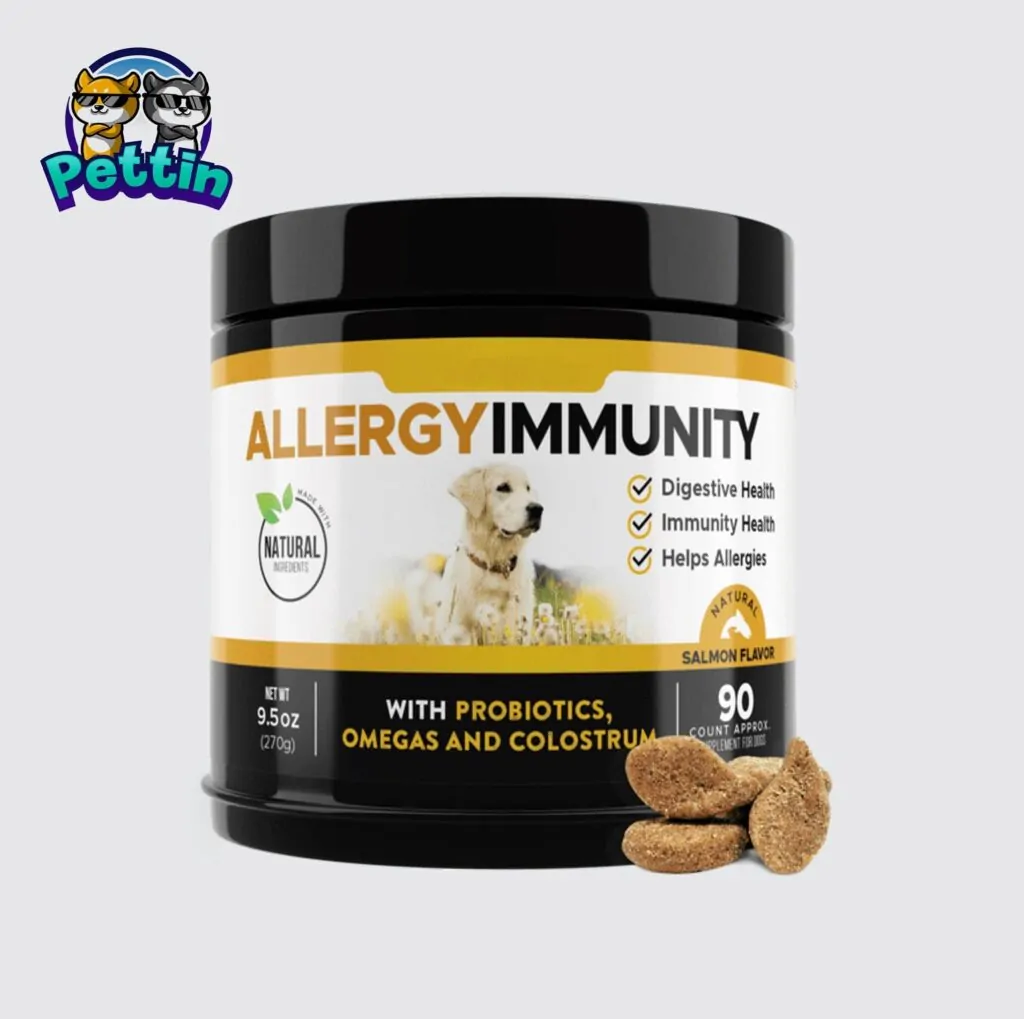
A balanced diet tailored to your dog’s sensitivities is crucial. Supplements can help ease inflammation and soothe itchy skin. Many pet parents use Get Pettin’s Allergy Support Blend, which contains natural ingredients like omega fatty acids, turmeric, and vitamins to nurture skin and strengthen immune response gently. Adding these can complement vet-recommended treatments effectively.
When to Consult Your Veterinarian
Persistent or worsening symptoms, signs of infection, or severe discomfort require veterinary attention. Early intervention avoids complications and improves your dog’s well-being.
Summary Box: Allergy Care Essentials
| Aspect | Action Steps |
| Signs to Watch | Itching, redness, ear infections, digestive upset |
| Common Triggers | Fleas, pollen, food ingredients |
| Diagnosis Methods | Skin test, blood test, elimination diet |
| Natural Care Tips | Flea control, hypoallergenic diets, baths |
| Supplement Support | Omega fatty acids, turmeric, Get Pettin Allergy Blend |
Conclusion
Dog allergies can be challenging but manageable with the right knowledge and care. Recognizing symptoms early, reducing exposure to allergens, and supporting your pup’s health with natural relief options paves the way for a happier, itch-free life. Your commitment, combined with professional guidance, will help your furry friend enjoy every moment with comfort and joy.
Frequently Asked Questions (FAQs)
Q1: Can allergies develop at any age?
A: Yes, allergies can develop in puppies or older dogs at any stage.
Q2: How to differentiate between food allergy and flea allergy?
A: Food allergies usually cause digestive and skin symptoms, while flea allergies mostly cause intense itching at flea bite sites.
Q3: Are natural remedies enough to manage dog allergies?
A: They can help but are best used alongside vet-guided treatment plans.
Q4: Can allergies cause weight loss in dogs?
A: Severe digestive allergies may lead to poor nutrient absorption and weight loss.
Q5: How can I prevent environmental allergies?
A: Regular cleaning, avoiding high pollen areas, and using air purifiers help reduce exposure.
Q6: Are allergy shots effective for dogs?
A: Yes, immunotherapy can desensitize your dog to allergens over time with about 60-70% success.