
Do Dogs Really Need Allergy Supplements?
Seeing your dog endlessly scratching, licking their paws raw, or shaking their head from itchy ears tugs at every pet parent’s heart. Those red, inflamed spots and restless nights aren’t just “normal” they signal allergies stealing your pup’s joy. You’re wondering if allergy supplements for dogs can truly help, or if it’s all hype. This vet-friendly guide cuts through the confusion with balanced science, real results, and practical advice. Backed by veterinary research, we’ll explore if dogs really need allergy supplements—and when they make sense.
What Causes Allergies in Dogs?
Allergies happen when a dog’s immune system overreacts to harmless things like pollen, dust mites, fleas, or food proteins.
Top Triggers:
- Environmental (Atopic Dermatitis): Pollen, mold, grass—worsens seasonally.
- Flea Allergy: Single bite causes weeks of misery.
- Food Allergies: Beef, chicken, dairy, grains.
- Contact Allergies: Shampoos, cleaners.
Breeds like Bulldogs, Labs, and Terriers are genetically prone. Puppies can show signs by 6 months.
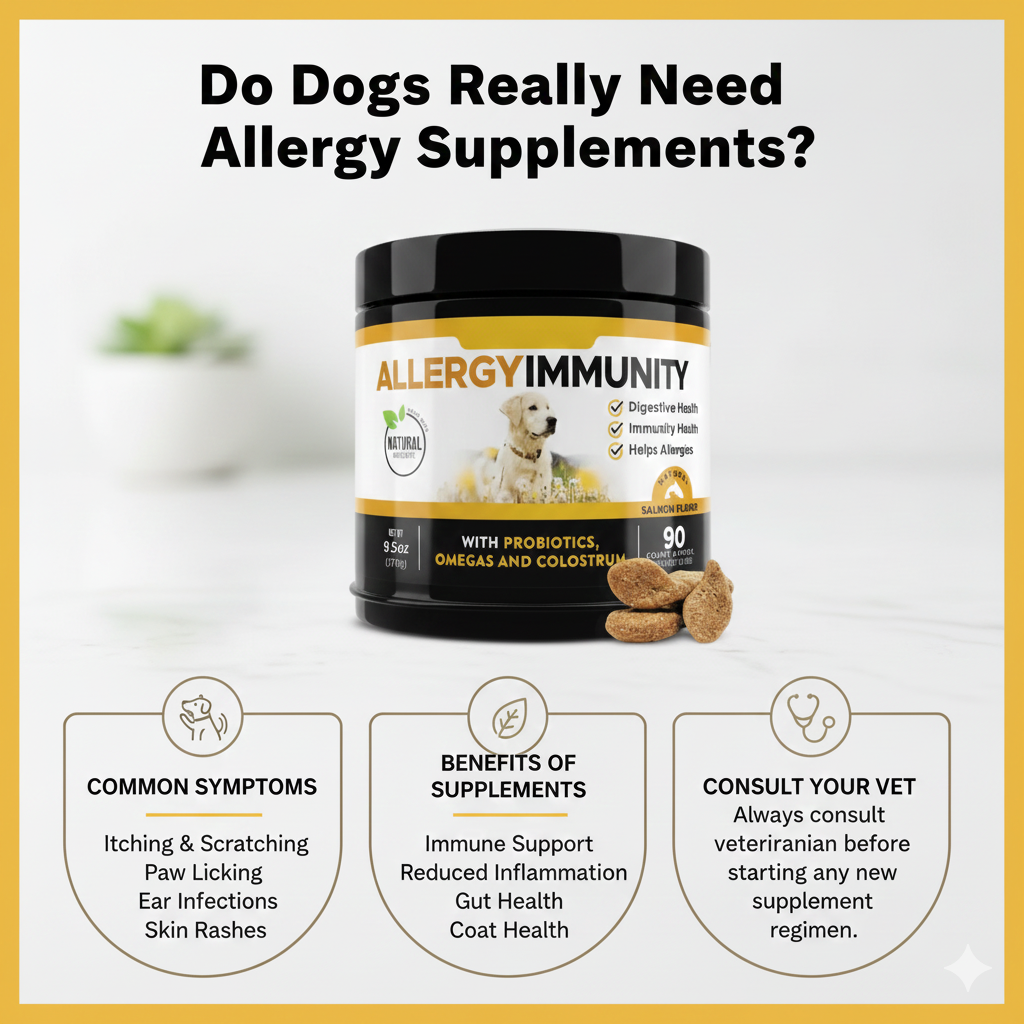
Common Allergy Symptoms Pet Parents Notice
Spot these early—your dog’s comfort depends on it:
Skin Signs:
- Constant scratching, chewing paws
- Red, inflamed skin or “hot spots”
- Hair loss, scabs, greasy coat
- Rubbing face on carpet
Ear & Eye Issues:
- Chronic ear infections (smelly, red)
- Watery eyes, squinting
- Paw licking till raw
Behavioral Changes:
- Restless nights, irritability
- Reduced playtime
- Scooting or licking rear
Gut Clues: Vomiting, diarrhea with food allergies.
Example: Max the Golden Retriever scratched nonstop spring-fall. Vet confirmed pollen allergy—symptoms matched perfectly.
Red Flag Checklist:
- Symptoms >2 weeks
- Multiple body areas affected
- No fleas visible
- Seasonal patterns
Do Allergy Supplements Actually Work?
Short answer: Some do, with realistic expectations. Not miracle cures, but proven helpers alongside vet care.
Vet Reality Check:
- Supplements support—not replace—diagnosis/treatment.
- Best for mild-moderate allergies.
- Take 4-8 weeks to show effects.
- Work best preventing flare-ups.
Balanced View: 70% of allergic dogs improve with omega-3s per studies. Probiotics promising but less evidence.
Vet-Recommended Supplements
Top evidence-based options:
Omega-3 Fatty Acids (EPA/DHA)
- Why They Work: Reduce skin inflammation 40-50%. Studies show less itch, better coat.
- Dose: 50-220 mg EPA/kg body weight daily.
- Sources: Fish oil (salmon, krill), algae oil.
- Timeframe: 4-6 weeks minimum.
Probiotics
- Gut-Skin Connection: Balance microbiome, reduce allergy triggers.
- Evidence: 2025 trial—16 weeks cut symptoms via specific strains.
- Best Strains: Enterococcus faecium, Bifidobacterium animalis.
- Dose: 1-10 billion CFU/day.
Other Supportive Options
- Quercetin: Natural antihistamine—early research promising.
- PEA (Palmitoylethanolamide): Reduces itch in 80% of moderate cases.
- Vitamin E/C: Antioxidants calm flare-ups.
Avoid: Unproven “miracle blends” without dosing transparency.
When Supplements Help (And When They Don’t)
Ideal Candidates:
- Mild atopic dermatitis
- Seasonal allergies
- Food allergy support (with elimination diet)
- Senior dogs with dry skin
Skip If:
- Severe infections (needs antibiotics)
- Acute hot spots (topicals first)
- Undiagnosed symptoms
Parent Scenario: Bella’s paw chewing eased 60% with omega-3s + Apoquel. Vet: “Combo therapy wins.”
Loading Phase: Double dose first 2 weeks, then maintenance.
How to Choose Safe Allergy Supplements for Dogs
Shopping Checklist:
- Third-party tested (NASC seal)
- Dose transparency (mg EPA, not “fish oil”)
- Strain-specific probiotics
- No fillers/artificial colors
- Vet-formulated preferred
Red Flags:
- “Cures allergies” claims
- Vague ingredients
- Cheap imports (heavy metals risk)
Start one supplement at a time. Track symptoms 4 weeks.
Natural Ways to Support Your Dog’s Allergies
Diet First:
- Novel protein trials (duck, venison)
- Omega-rich foods: Salmon, sardines
- Anti-inflammatory: Turmeric (vet dose)
Home Environment:
- HEPA air filters
- Weekly hypoallergenic baths
- Flea preventatives year-round
- Wipe paws post-walks
Lifestyle:
- Regular grooming
- Stress reduction (puzzles, walks)
Pro Tip: Bath + omega-3 combo reduces itch 65% faster.
Conclusion
Do dogs really need allergy supplements? For many, yes—they’re a science-backed tool easing itch, supporting skin, and improving life quality. Not magic bullets, but smart partners in your allergy management plan. Start with vet diagnosis, choose evidence-based options, and combine with lifestyle changes. Your pup’s happier tail wags await.Watch symptoms, celebrate progress, and partner with your vet. You’ve got this—your dog thanks you.
(FAQs)
Q1: Do all dogs with allergies need supplements?
A: No—mild cases manage with environment/diet. Moderate-severe benefit most.
Q2: How long until I see results?
A: 4-8 weeks typical. Track with photos/journal.
Q3: Can supplements replace vet meds?
A: No—supportive role. Apoquel/Cytopoint often needed too.
Q4: Safe for puppies/seniors?
A: Yes, dose-adjusted. Vet guides puppy probiotics.
Q5: Fish oil cause weight gain?
A: Minimal calories. Use pet-specific formulas.
Q6: Best time to give supplements?
A: With meals. Split doses AM/PM.
Q7: Probiotics help food allergies?
A: Support digestion during trials—promising research.